

Login or create an account
CloseReturning Customer
I am a returning customer
Login or create an account
CloseRegister Account
If you already have an account with us, please login at the login form.
Your Account Has Been Created!
Thank you for registering with Lamacoid Labels and Tags!
You will be notified by e-mail once your account has been activated by the store owner.
If you have ANY questions about the operation of this online shop, please contact the store owner.
Account Logout
You have been logged off your account. It is now safe to leave the computer.
Your shopping cart has been saved, the items inside it will be restored whenever you log back into your account.
Lamacoid Label Installation Guide
25/09/2026
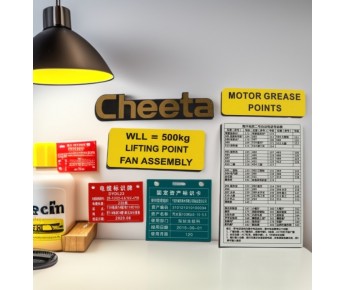
1. Surface Preparation
Proper surface preparation is the most important step for ensuring a secure bond. Degrease and clean all surfaces that will receive adhesive or identification materials. Use isopropyl alcohol to clean surfaces before installation to improve adhesive performance. Remove all dust, oil, and other contaminants before proceeding. Do not install on wet surfaces, and avoid application in extremely cold conditions.
2. Adhesive Mounting (Peel-and-Stick)
Adhesive-backed Lamacoid labels are best suited to smooth, clean surfaces including switchboards, electrical panels, and indoor equipment. For interior nameplates, double-sided tape is a common mounting method. Industrial-grade adhesives such as 3M 9080 or 3M 468MP acrylic transfer adhesive are recommended for high-performance bonding on smooth, high-surface-energy substrates (painted or coated metals, bare metals, rigid plastics).
Steps:
1). Clean the surface with isopropyl alcohol and allow it to dry completely.
2). Peel the release liner from the adhesive backing.
3). Position the label carefully and press it firmly onto the surface.
4). Apply even pressure across the entire label to eliminate air bubbles and ensure full adhesive contact.
5). Allow adequate curing time to reach final bond strength before exposing the label to weather or handling.
For adhesive mounting of large plates, include relief holes or slots to accommodate thermal expansion and to facilitate alignment.
3. Mechanical Fastening (Screws, Rivets, or Bolts)
Mechanical fastening is recommended for permanent, outdoor, or vibration-prone environments, and is the most secure method for mounting engraved labels on control panels, junction boxes, and outdoor installations. For exterior Lamacoid nameplates, mount using self-tapping screws (2.3 mm / 3/32″ diameter slot head) — two per nameplate. Rivets or screws are commonly used where heat or vibration may cause adhesives to fail.
Steps:
1). Mark and drill clean mounting holes into the Lamacoid label and the mounting surface. Use small pilot holes to limit edge cracking.
2). Use stainless steel screws or rivets for corrosion resistance.
3). Fasten the label securely in a conspicuous place where it can be easily read.
4). Be cautious with torque — over-tightening can crack the material.
5). Add washers if mounting on uneven surfaces.
For equipment enclosures, pop rivets are preferred over screws to maintain enclosure integrity.
4. Zip-Tie or Wire Mounting
For cable bundles, conduit pipes, valves, and temporary setups, pre-slotted Lamacoid tags can be secured using nylon or stainless steel zip ties. Ensure the tags do not slide or rotate after installation. Choose rounded corners to prevent abrasion or catching on nearby wires. Valve tags should be secured with non-ferrous chains or closed “S” hooks.
5. Fastener and Adhesive Selection Summary
Method Best For Key Notes
Adhesive backing Smooth indoor surfaces Use industrial-grade adhesive; clean surface first; apply firm pressure
Screws Outdoor signs and panels Very secure long-term fixing method; use stainless steel
Rivets Metal asset tags Permanent industrial attachment; preferred for enclosures
Cable ties Valve tags and cable markers Suitable for removable identification
6. Environmental Considerations
For outdoor installations exposed to UV radiation, moisture, temperature variation, and abrasion, mechanical fixing methods generally provide better long-term reliability than adhesives. Select UV-stable materials for long-term exposure, and ensure the surface is clean, dry, and above the minimum application temperature before installation.
Where labels cannot be mounted to a cool surface, provide standoffs to prevent heat damage. Do not paint, insulate, or cover installed nameplates.
7. Location and Positioning
Install labels in a conspicuous location to facilitate easy reading and identification from the operating floor. Position identification at approximately right angles to the most convenient line of sight, considering operating positions, lighting conditions, and reduced visibility over time due to dust and dirt. Lamicoid nameplates should be installed above all types of receptacles and abutted directly to the tops of their respective device plates